top of page

Check out some of the amazing things that our community is up to!

Always one of the colder days in south western Kentucky, a fiery conviction burned first in the Trigg County Justice Center and, later, the Bloomfield Missionary Baptist Church Monday morning and afternoon — as more than 100 people gathered and gleaned on home and history for the Genesis Express 30th Annual Dr. Martin Luther King Jr. Day in Cadiz.

At the heart of this year’s message, through local educator and non-profit pillar George Radford, was “39, 39 and 250.”

Genesis Express has repaired and rebuilt the lives of young children and their families since 1987, now 39 years going strong.

On April 4, 1968, King was assassinated in Memphis — a young 39 years old — his words only amplified with each passing spring.

And America, still somehow embroiled in civil rights, equality and justice issues, celebrates its 250th birthday this July 4.

All three timelines, Radford said, have met a crossroads in this community — as division tries to consume the nation.

The reasons to march even now, Radford said, are many.

Before taking a faith walk up Jefferson Street and to the church, the group paused for the revelation of King’s portrait — which now hangs just outside the second-floor courtroom in the Justice Center.

At Bloomfield, visitors were treated to joyous praise and song, before Class of 1987 Trigg County graduate and learned African-American and Black history scholar Reggie Thomas brought forth key points in the nation’s history.

King, he said, did serve as a catalyst and crucible during the Civil Rights Era, which arguably ran from 1954 through his untimely death.

But the true beginning of Blacks seeking “equality for all,” he added, really came through the many chapters of America’s military history — men and women of color serving their country along the way, despite the dangers and downfalls of daily life.

The most important chapter, he believes, was the American Civil War.

Thomas noted that several Trigg County African-American and Black families can trace their roots back to soldiers who once served — some paying the “ultimate price” for freedom — and that from World War I to World War II, Black enlistment more than tripled to nearly 1 million soldiers.

Born in 1965, shortly before King’s death, Bloomfield Pastor Marvin Barnes cautioned that “the fire is still alive.”

Just barely.

Revolutionary War (1775–1783)

  • Early exclusion, then necessity: At first, the Continental Army barred Black enlistment. As manpower shortages grew, policies changed.

  • Service numbers: An estimated 5,000–8,000 Black soldiers served on the Patriot side; thousands more served with the British, who promised freedom.

  • Integrated units: Many Northern units were racially integrated.

  • Notable unit:

    • 1st Rhode Island Regiment – one of the first racially integrated units, composed largely of formerly enslaved men.

  • Legacy: Military service did not translate into equal rights; many veterans returned to enslavement or discrimination.

Early Republic & War of 1812

  • Restricted roles: Black sailors were more common in the Navy than soldiers in the Army.

  • War of 1812: Black troops and sailors played key roles, particularly in naval engagements and coastal defense.

  • Aftermath: Some states restricted Black militia participation despite proven service.

Civil War (1861–1865)

  • Initial exclusion: At the war’s start, Black Americans were barred from Union service.

  • Turning point:

    • Emancipation Proclamation (1863) allowed Black enlistment.

  • United States Colored Troops (USCT):

    • ~180,000 soldiers and ~20,000 sailors served the Union.

    • Commanded mostly by white officers.

  • Notable units & figures:

    • 54th Massachusetts Infantry (Fort Wagner)

    • Sgt. William Carney – first Black Medal of Honor recipient

  • Harsh realities:

    • Lower pay (until 1864)

    • Higher casualty rates

    • Risk of execution if captured by Confederates

  • Impact: Black military service helped redefine freedom and citizenship, influencing Reconstruction amendments.

Post–Civil War & Indian Wars (1866–1898)

  • Buffalo Soldiers:

    • 9th & 10th Cavalry, 24th & 25th Infantry

    • Served in the West, protecting settlers, building infrastructure, and fighting Native American tribes.

  • Contradiction: Black soldiers fought for U.S. expansion while denied equality at home.

  • Recognition: Earned numerous Medals of Honor despite discrimination.

Spanish-American War & World War I

Spanish-American War (1898)

  • Black regiments fought in Cuba and the Philippines.

  • Faced segregation and racial violence even in uniform.

World War I (1917–1918)

  • Segregated forces: Black soldiers largely assigned to labor units.

  • Combat exception:

    • 369th Infantry Regiment (Harlem Hellfighters) served under French command.

  • Achievements:

    • Never lost a trench

    • Earned widespread French honors

  • Return home: Faced renewed racism and the Red Summer of 1919.

World War II (1941–1945)

  • Segregated military: Over 1 million Black Americans served.

  • Notable contributions:

    • Tuskegee Airmen – first Black military pilots; exceptional bomber escort record

    • 761st Tank Battalion – fought under Gen. Patton

    • Navy Seabees and logistics units critical to victory

  • Double V Campaign: Victory against fascism abroad and racism at home.

  • Turning point:

    • Executive Order 9981 (1948) – President Truman ordered desegregation of the armed forces.

Korean War & Cold War Era

  • First integrated war: Korean War (1950–1953)

  • Progress: Units increasingly integrated based on performance rather than race.

  • Ongoing challenges: Discrimination in promotions and assignments persisted.

Vietnam War (1955–1975)

  • Disproportionate service: Black Americans were overrepresented in combat roles early in the war.

  • Racial tensions: Reflected broader civil rights struggles at home.

  • Leadership gains: Greater numbers of Black NCOs and officers emerged.

  • Impact: Military became a space where racial inequality was increasingly challenged.

Post-Vietnam to Gulf War

  • All-volunteer force: Increased opportunities for advancement.

  • Growing representation: Black Americans became a significant portion of enlisted personnel.

  • Leadership: Rise of Black senior officers.

21st Century: Iraq, Afghanistan, and Beyond

  • Fully integrated force: Black Americans serve at every level and in every role.

  • Notable leaders:

    • Colin Powell – Chairman of the Joint Chiefs of Staff; Secretary of State

    • Lloyd Austin – first Black Secretary of Defense

  • Ongoing issues: Representation at the highest ranks continues to evolve, but formal barriers are gone.

  • Legacy: Military service remains a pathway to education, leadership, and social mobility.


A native of Trigg County will be the featured speaker for the annual Martin Luther King, Jr, Day service in January. The annual march and service are sponsored by Genesis Express to honor the life of Dr. King and his dream of unity. Past President George Radford says this year’s celebration will tie into a special commemoration for our nation. He says more details about the Martin Luther King, Jr, march and commemoration service will be announced in the future after they are finalized.


A Class of 1974 graduate of Trigg County High School and native of Rocky Ridge, Mr. Sanford Irvin delivered a strong message during Friday night’s Second Annual Genesis Express “United to Serve” Banquet at the Lexi Bush Convention Center.


There is no community, he said, without “unity” — and he called on adults to rise up and lead in these “tumultuous times.”

Use Up/Down Arrow keys to increase or decrease volume.

A man of faith, a husband with four children and a farmer of chickens and hogs in central Kentucky, Irvin also reflected on a riotous string of advice from his former assistant cross-country coach, Buddy Sivills.


“United to Serve” Woman of the Year went to Agnes Bernice Wilson Radford. The magnanimous wife of George “Big G” Radford for more than 55 years, she’s a Princeton native who attended Dotson before graduating from Caldwell County High School.

She’s an active member of the Cave Spring Missionary Baptist Church in Cerulean, who — in 1972 — lost her unborn child and flatlined, in what she called a “horrific” DUI-involved automobile accident.

And today, she stands well accomplished.


“United to Serve” Man of the Year went to Joe Edwards Rogers. The stalwart husband of Patricia Rogers for more than 50 years, and the father of Visit Hopkinsville! Executive Director Amy Rogers, he has served on the Pennyrile Electric board representing the Cumberland district since August 1976.

He still owns and operates Little Pines Farm in Trigg County, and he was the first African-American in Trigg County to earn the title of “master conservationist.”


“Outstanding Trail Blazer” of the Year went to Ron Smith, who moved to Trigg County about four years ago, while “Outstanding Genesis Express” Member of the Year went to the organization’s oldest, and perhaps wisest, in John Ladd.


A surprise honor came for local optometrist and philanthropist Dr. Scott Sutherland, when the outgoing Genesis Express President Radford announced him as the “Unsung Hero” and “Sixth Man” of the Year for the body.

Sutherland dedicated his efforts, and the award, to his family and his childhood caretaker, Jenny.


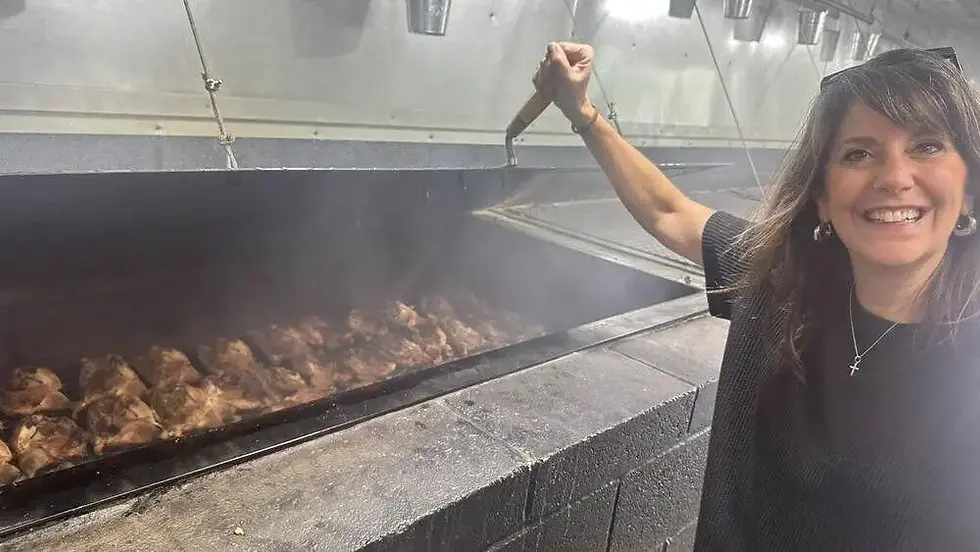
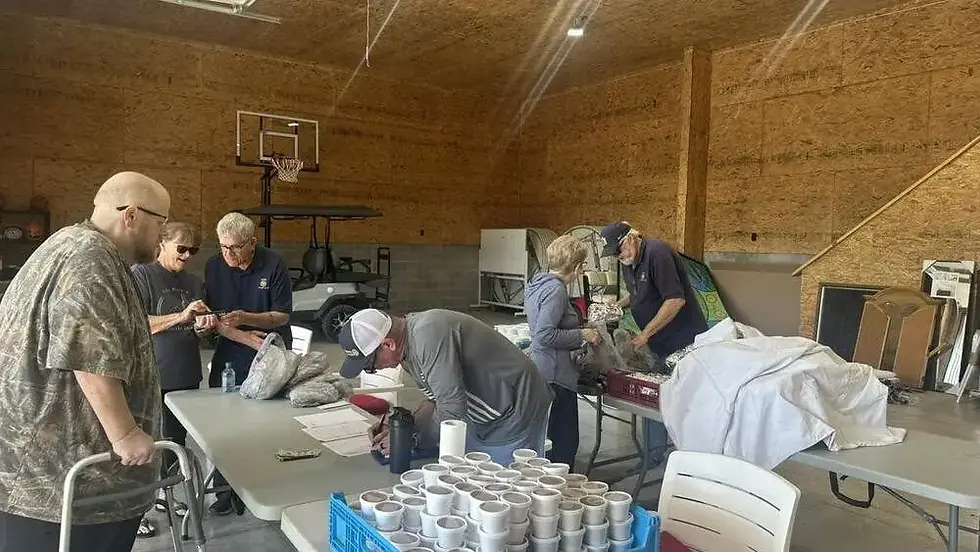
More than 20 local students remain active with STEM and tutoring programs at the new Genesis Express Intergenerational Community Center, and Radford confirmed the space is consistently booked for local and regional meetings — while the new barbecue shed stays warm and ready for the next meal.

2026 OfficersPresident: Bobby AcreeVice President: John LaddSecretary: Dexter HopsonAssistant Secretary: Jonathan WhiteTreasurer: Jerry WilsonFinancial Secretary: Michael LaddHistorian: Jonathan WhitePublic Relations: George RadfordSergeant-at-Arms: Anthony Browder

Members: Billie Walker, Fred Wilson, Randolph Crenshaw, Eugene Wilson, Thaddeus “Jock” Bingham, Lewis Crenshaw, Victor Radford, Ronald Smith

Trail Blazers: Xavier Radford, Eric Bleidt


Second Annual “United To Serve” Banquet


© 2025 WKDZ Powered by OneCMS™ | Served by InterTech Media LLC


ABOUT US :

  • Bobby Acree - President

  • John Ladd - Vice President

  • Dexter Hopson - Secretary

  • Jonathan White - Asst. Secretary

  • Jerry Wilson - Treasurer 

  • Michael Ladd -  Financial Secretary

  • Jonathan White - Historian

  • George Radford - Public Relations

  • Anthony Browder - Sargent at Arms

  • Lewis Crenshaw - Member

  • Jock Bingham - Member 

  • Billie Walker - Member 

  • Fred Wilson - Member 

  • Reggie Cavanaugh - Member

  • Victor Radford - Member

  • Ron Smith - Member

  • Eugene Wilson - Member

  • Randolph Crenshaw - Member

Executive Board Members 

·      George Radford

·      Dexter Hopson

·      Jerry Wilson

·      Michael Ladd

·      Jonathan White

·      John Ladd

·      Bobby Acree

facebook-logo_1080029-107.avif

CONTACT >

T: 270-206-5095 (Bobby Acree for caterings)

T: 270-350-4975 (Genesis Express Community Center) 

E: expressgenesis0@gmail.com

Address: 205 Jefferson Street

Cadiz. Kentucky 42211

Subscribe to Our Newsletter

Thanks for submitting!

Abide.png

 © 2025 Created by ABIDE DIGITAL and secured with Wix.com

bottom of page